About This Project
About The July Resolve
On August 5, like millions of others at home and abroad, I sat transfixed in front of the television. The Army Chief was scheduled to address the nation at 2 p.m. By then, we already knew what he was going to say. Hundreds of thousands had taken to the streets, vowing not to return home until Prime Minister Sheikh Hasina had resigned. At 2:25 p.m., she did. The Army Chief confirmed her resignation in a delayed address around 4 p.m.
More people surged into the streets—this time not to protest, but to celebrate. I took a walk in my neighborhood with my children, where a jubilant crowd had gathered. Familiar faces—friends, neighbors, acquaintances—embraced each other. We laughed. We cried. In that moment, we felt a collective sense of joy, relief, and hope. But all of it came at a staggering cost.
Countless lives had been lost. Thousands were injured—many with wounds that would alter their lives forever. During those fleeting hours of triumph, we momentarily forgot the price we had paid. But the weight of that cost slowly began to sink in. We had lost our heroes. And it was on their shoulders that we now stood, testing the limits of our newfound freedom.
One of them was Shahriar Khan Anas, student of Grade X. On the morning of August 5, Anas woke up, took a shower, wrote a letter to his mother, and quietly left home. He wrote: "Ma, I'm going to join the procession… If I don't return, don't grieve—be proud." At 12:45 p.m., Anas was shot by police. A bullet had pierced his left chest. He died instantly. He was just 17 years old. Anas was one of the hundreds killed over the 36 days of the uprising.
There were many others. Some returned home. Some returned injured. Others returned in body bags. This book is a collection of their stories and voices—the unheard, the ignored, the unyielding. At It's Humanity Foundation, we met many of them at Suhrawardy and Pongu Hospitals. There, we committed to supporting the long-term treatment and rehabilitation of survivors. Some will need years of physiotherapy. Some will never walk again. All had heartbreaking and fascinating stories to tell. And one thing was certain—they wanted to be heard, and for their stories to go out to the world.
Despite everything they had endured, there was a quiet but infectious optimism in their voices. A resolve: "If it comes down to this again, I'll do it all over." And yet, as I write this in July 2025, I can't help but feel a deep sense of disillusionment with the way the country has shaped up since the movement. Still, no matter how bitter the present may feel, nothing can take away what we achieved: we brought down a repressive regime once thought invincible.
The true protagonists of this anthology are the people who made that possible. They bore the brunt of the most brutal crackdown this country has witnessed since 1971. They were students and professors, rickshaw-pullers and lawyers, activists and garment workers, grocers and nurses—ordinary people bound by a common thread of extraordinary courage.
We interviewed 50 individuals who had actively participated in the movement. Many we met while they were still being treated in hospitals. We witnessed their injuries first-hand: bullet wounds, amputations, bodies pierced with shrapnel or embedded lead pellets—scars they will carry for the rest of their lives. We asked why they had risked their lives. Their answer was simple: "For freedom." And when asked whether it was worth it, more than one replied: "We live in a free country now, don't we?"
We also spoke with people who had supported the movement in quieter but equally vital ways: a university registrar who stood by the gates of his institution, occasionally letting in students seeking refuge from the ensuing violence; professors who had arranged housing for displaced students; a transgender woman who had traveled to Dhaka to donate blood; student journalists who, at great personal risk, kept the world informed; a photographer who took lead pellets to the arm and back – yet never let go of his camera, driven by an almost feverish pursuit to unveil the truth.
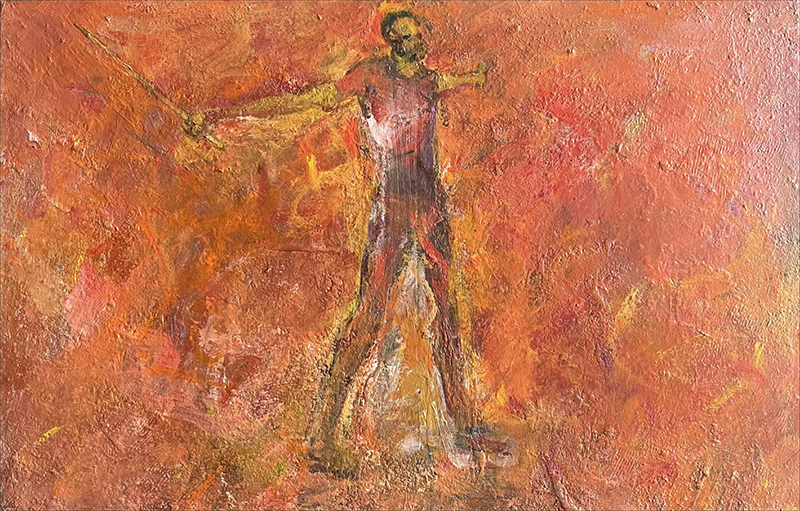
We selected 36 of these stories—one for each day the movement lasted. One name came up again and again like a familiar refrain: Abu Sayeed. On July 16, 2024 at 2:17 p.m., Abu Sayeed, a student at Begum Rokeya University in Rangpur, was shot by police. He was unarmed. He stood alone, hands outstretched, posing no threat. He died instantly. His death was an inflection point.
What began as a protest against a deeply unpopular quota system became a nationwide uprising—born not out of sudden rage, but from years of frustration, disillusionment, and a yearning for justice and democracy. This book is a collection of oral histories, arisen from the sacrifices of hundreds like Abu Sayeed. It is our responsibility – our sacred duty – to preserve their stories and pass them on. These are not just tales of tragedy, but enduring testaments to courage, dignity and the unyielding will of a people who refused to bend at the knee in the face of tyranny.