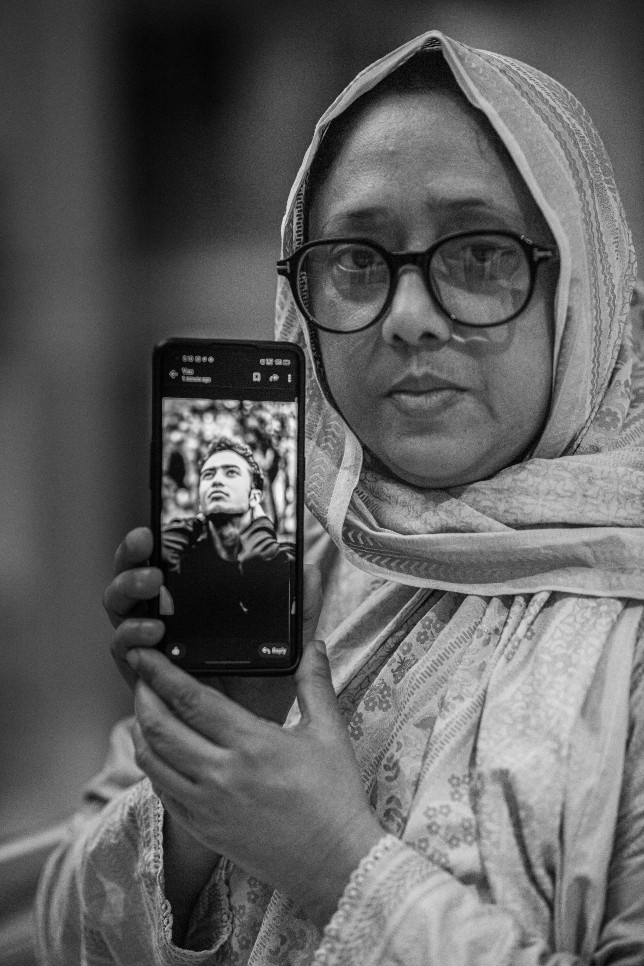
Shamshi Ara Jaman's life changed irrevocably on July 19, 2024. A mother and entrepreneur from Rangpur, her son, journalist and activist Tahir Jaman Priyo, was martyred during the historic anti-quota movement. “Tahir was always a fighter, like me,” she said. “I never compromised with injustice, and he inherited that same courage.”
Tahir had always been drawn to activism. A student of cinematography at South Asian University Pathshala, he had participated in multiple movements—protests for the mountains, safe streets, and the Gono Jagoron. “He kept most of it from me to keep me from worrying, but I learned about his activism after his death,” Shamshi Ara shared. Despite the risks, Tahir's commitment was unwavering. His mother recalls his words vividly: “Ma, I would like to die for my country, I may die on the streets.”
The days leading up to his death were marked by quiet determination. Tahir, disillusioned by the lack of freedom in journalism, had left his job, refusing to sustain his family with what he called “false news.” He joined the movement, not only as a journalist but also as an advocate for justice. “He often told me, 'This government won't last much longer,'” she recalled.
On July 19, Tahir was killed. The news was withheld from his mother until late that night. “I saw crowds on the streets, and I was watching the coverage on TV. My husband then took me aside and said, 'Priyo has been shot.'” Hours later, she discovered that her son's body lay in the Dhaka Medical College morgue. Even then, retrieving his body was fraught with challenges. “Police didn't want to release his body. But I insisted on a post-mortem—I needed justice.”
The aftermath of Tahir's death brought further turmoil. Upon returning to Rangpur after the funeral, Shamshi Ara's home was raided by 500 police officers, who vandalized her property. Ten cases were filed against her husband. Despite pressure from authorities, including an invitation from the Prime Minister herself, Shamshi Ara stood her ground: “Tell Sheikh Hasina to bring back my son. Only then will I meet her.”
Her pain was tempered by moments of pride and hope. When asked about her feelings about the current state of the country, she mentioned that she attended the Bijoy Michil (Victory Rally) on August 5, finding solace in the collective celebration of freedom. “Freedom of speech may have been established,” she said. “But the cost—losing my son—is a price no mother should ever have to pay.”
Now, Shamshi Ara channels her grief into strength, advocating for justice and systemic change. “We won freedom of speech after losing so many lives. Now we don't want my son's blood to have been shed in vain. I regained my strength, propelled by the need to do something for the justice